Finding sewage coming up in your yard is upsetting, and it’s a real health hazard, but it’s usually fixable. The first half hour matters most. Follow the steps below right away. Then look at where the sewage is surfacing, because the spot tells you a lot about the cause and how quickly it needs a professional.
What to Do Right Now (First 30 Minutes)
- Keep kids and pets away. Raw sewage carries bacteria and viruses. Don’t let anyone play, walk or mow in the wet area.
- Stop using water inside. Hold off on laundry, the dishwasher, showers and baths, and avoid flushing unless you absolutely have to. Every gallon you send down the drain adds to the overflow.
- Protect yourself. If you have to go near it, wear rubber boots and gloves, and wash your hands well afterward.
- Note where it’s coming up. Is it near the tank lid, over the drain field, at a cleanout pipe, or near the street? Take a photo if you can. It helps the plumber diagnose the problem faster.
- Call a plumbing and septic company. Sewage outside needs a professional, and the sooner the better. Underwood Plumbing & Septic offers emergency plumbing and septic service across Northeast Texas.
Where Is It Coming Up? What That Tells You
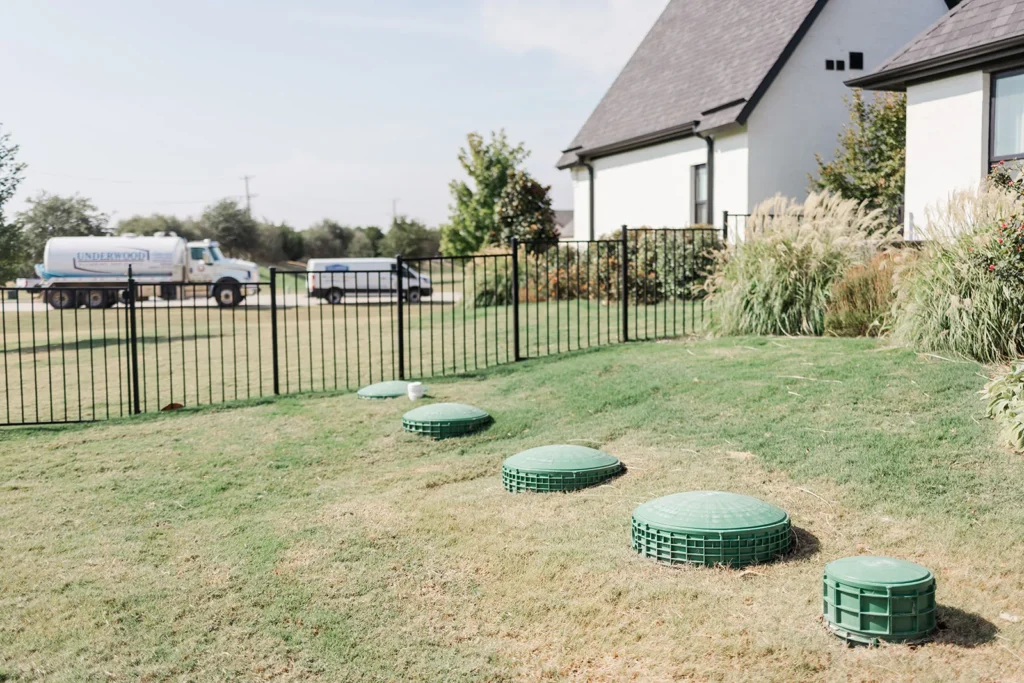
Around the Septic Tank Lid or Riser
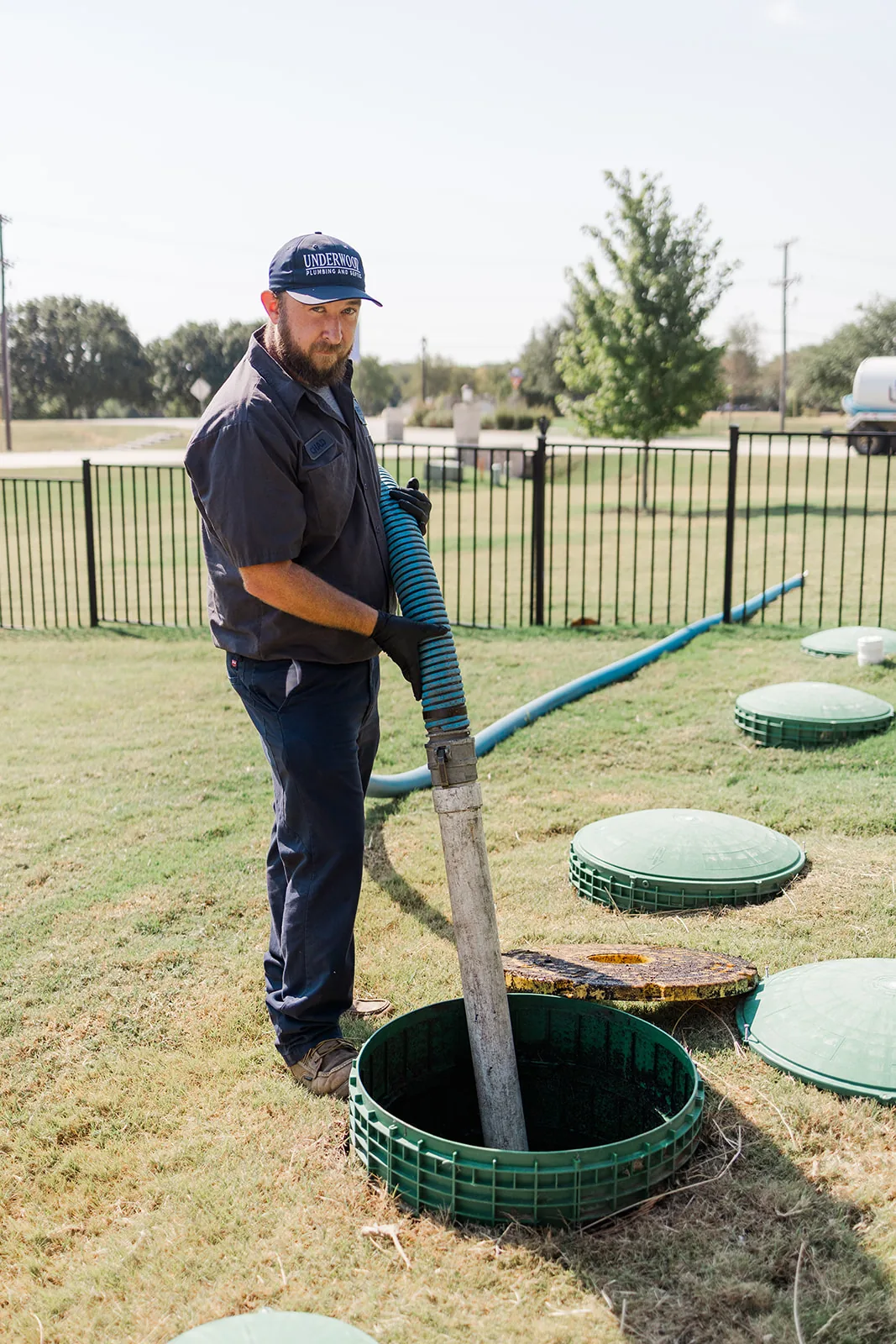
Sewage seeping up around the tank usually means the tank is overfull or the outlet is blocked, so waste has nowhere to go. If it’s been more than a few years since the tank was pumped, that’s a likely cause. The fix usually starts with septic tank pumping and cleaning, followed by a check of the baffles and outlet.
Over the Drain Field
Grass over the drain field that’s soggy, smells bad and looks greener than the rest of the yard points to a drain field that can’t absorb any more water. Sometimes the soil is simply saturated after heavy rain. Other times the field is clogged with solids or near the end of its life. Pumping alone won’t fix a failing drain field, so you’ll need an inspection and possibly septic repairs.
At a Cleanout Pipe Near the House
If sewage is bubbling out of a cleanout (the capped pipe sticking out of the ground near your foundation), the main line between your house and the tank or street is likely blocked. Roots, a collapsed section or a buildup of grease and wipes are common causes. A sewer camera inspection shows exactly where the blockage is, so it can be cleared or repaired without guessing. Learn more about our sewer line inspection and repair service.
From Aerobic System Sprinkler Heads
Many rural homes in Texas use an aerobic septic system, which treats wastewater and sprays it on the lawn through sprinkler heads. Properly treated water should be clear with little to no odor. If the spray smells like sewage, looks cloudy, or the system’s alarm light or buzzer is on, something isn’t working, often the chlorinator, the air pump or a float switch. Turn off the irrigation if you can, and have the system checked.
Near the Street or Property Line
If your home is on city sewer, such as in parts of Bonham, Sherman, Denison or Paris, sewage near the street could come from your private service line or from the city’s main. Rules vary by city, but homeowners are usually responsible for their own line up to the city connection. If sewage is coming up in the street or from a city manhole, call your city’s public works or utility department too. A plumber can check your side of the line to see where the problem is.
Common Causes in Northeast Texas
Local conditions here can make sewage coming up in the yard more likely:
- Heavy rain on clay soil. Much of our area has dense clay that drains slowly. After a stretch of spring or fall storms, a drain field can fill with rainwater and stop absorbing wastewater.
- Tree roots. Oaks, pecans and willows send roots into tanks, lines and drain fields looking for water.
- Skipped pumping. When solids build up in the tank, they flow into the drain field and clog it.
- Older systems. Many drain fields were sized for smaller households with fewer water-using appliances than today’s homes have.
Is It an Emergency?
Sewage coming up in your yard always needs a professional, but some situations can’t wait. Call a septic professional right away, day or night, if:
- Sewage is near a water well, a pond or creek, or an area where children play. If you have a well, don’t drink the water until it’s been tested.
- Sewage is also backing up into your home
- An aerobic system’s alarm is going off
- The area is large or growing
A small damp spot after heavy rain is less urgent, but still call, keep water use low and keep everyone away from it until it’s checked.
What Not to Do
- Don’t pour in septic additives hoping to “fix” it. The Texas Commission on Environmental Quality advises against chemical additives and enzymes.
- Don’t cover it with dirt or mulch. That hides the problem without solving it.
- Don’t hose it toward a ditch, drain or neighbor’s yard.
- Don’t open the tank yourself. Septic gases are dangerous, and an open tank is a serious fall risk.
- Don’t keep doing laundry or running long showers until it’s fixed.
What the Plumber Will Do
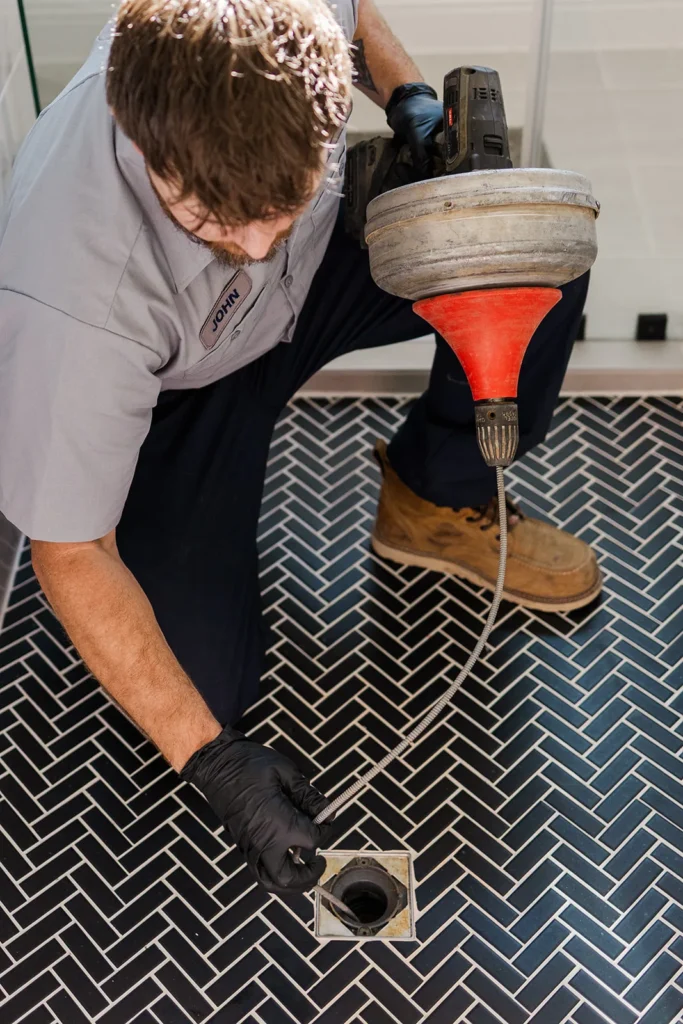
A septic professional will find the source, pump the tank if needed, check the baffles and outlet, run a camera through the line if a blockage is suspected, and inspect the drain field and other septic components. Then you’ll get clear repair options. If sewage also got into your home, our earlier guide to a backed-up septic tank covers indoor cleanup.
Some septic work in Texas, including drain field repairs and tank replacement, requires a permit from the local permitting authority. A licensed septic company can tell you what’s required.
How to Keep It From Happening Again
- Pump on schedule. The EPA recommends having a typical septic system inspected at least every three years and pumped every three to five years.
- Spread out laundry. Running several loads in one day can flood the drain field.
- Keep water away from the drain field. Direct gutters and downspouts away from it.
- Protect the drain field. Don’t park, drive or build over it.
- Flush only toilet paper. Wipes, even “flushable” ones, cause clogs, and so does grease poured down the drain.
- Keep up with aerobic system maintenance. Texas has specific maintenance rules for aerobic and other advanced systems. The TCEQ explains them in its advice for septic system owners.
Our Maintenance Membership includes regular septic inspections, so small issues can be caught before they reach your yard. You can also read our guide to emergency septic repairs.
Sewage in Yard FAQs
Is Sewage in My Yard Dangerous?
Yes. Raw sewage can carry bacteria, viruses and parasites that make people and pets sick. Keep everyone away, wear gloves and boots if you have to go near it, and have it fixed quickly.
Who Pays If Sewage Is Coming Up Near the Street?
It depends on where the problem is. In most cities, the homeowner is responsible for the private line up to the city’s connection, and the city handles its main. A plumber can find the location so you know whose problem it is.
Can Heavy Rain Make My Septic System Overflow Into the Yard?
Yes. When clay soil is saturated, the drain field can’t absorb wastewater, and it may surface. If it happens after every big rain, the drain field may be undersized or failing and should be inspected.
Can I Call You at Night or on the Weekend?
Yes. Underwood Plumbing & Septic offers emergency service. Call (903) 449-1677 any time and our team will talk you through next steps.
Sewage in Your Yard? Call Underwood Plumbing & Septic
Don’t wait for it to get worse. Underwood Plumbing & Septic provides septic and plumbing service across Fannin, Grayson, Collin, Hunt and Lamar counties and Southern Oklahoma. Call (903) 449-1677 now and our licensed team will find the cause and recommend the right repair.
________________