A burst water heater can empty 40 or 50 gallons onto your floor in minutes, and it keeps refilling from your water supply until you stop it. Don’t panic, but move quickly. Shut it down in the order below, then deal with the water. If you’re not sure about any step, call a plumber.
Step 1: Turn Off the Power or Gas
If you smell gas, don’t touch any switches or use your phone inside. Leave the house right away and call your gas company or 911 from outside.
- Electric water heater: Turn off the water heater’s breaker in your electrical panel, but only if the panel area is dry and you don’t have to stand in water to reach it. If you can’t do that safely, stay out of the water and call for help. Don’t touch the unit, and don’t stand in water near outlets or cords.
- Gas water heater: Turn the gas control knob on the front of the unit to “Off,” or close the gas shutoff valve on the supply line next to the heater.
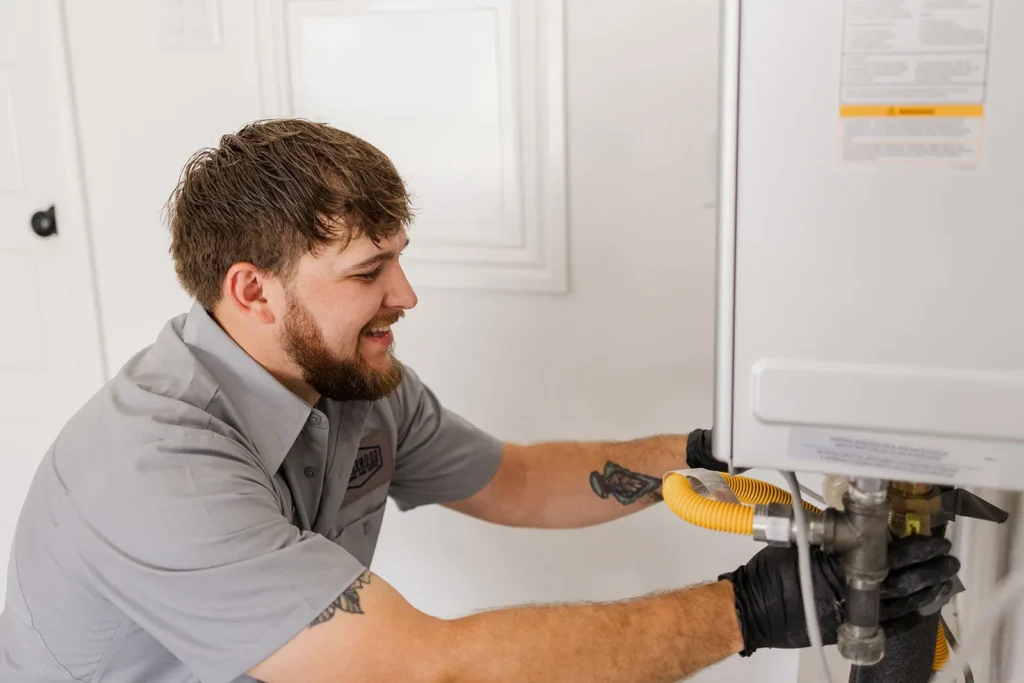
- Tankless water heater: Switch off its power at the breaker or switch, close the gas shutoff valve on the supply line if it’s a gas unit, and close the water valves under the unit.
Step 2: Shut Off the Water
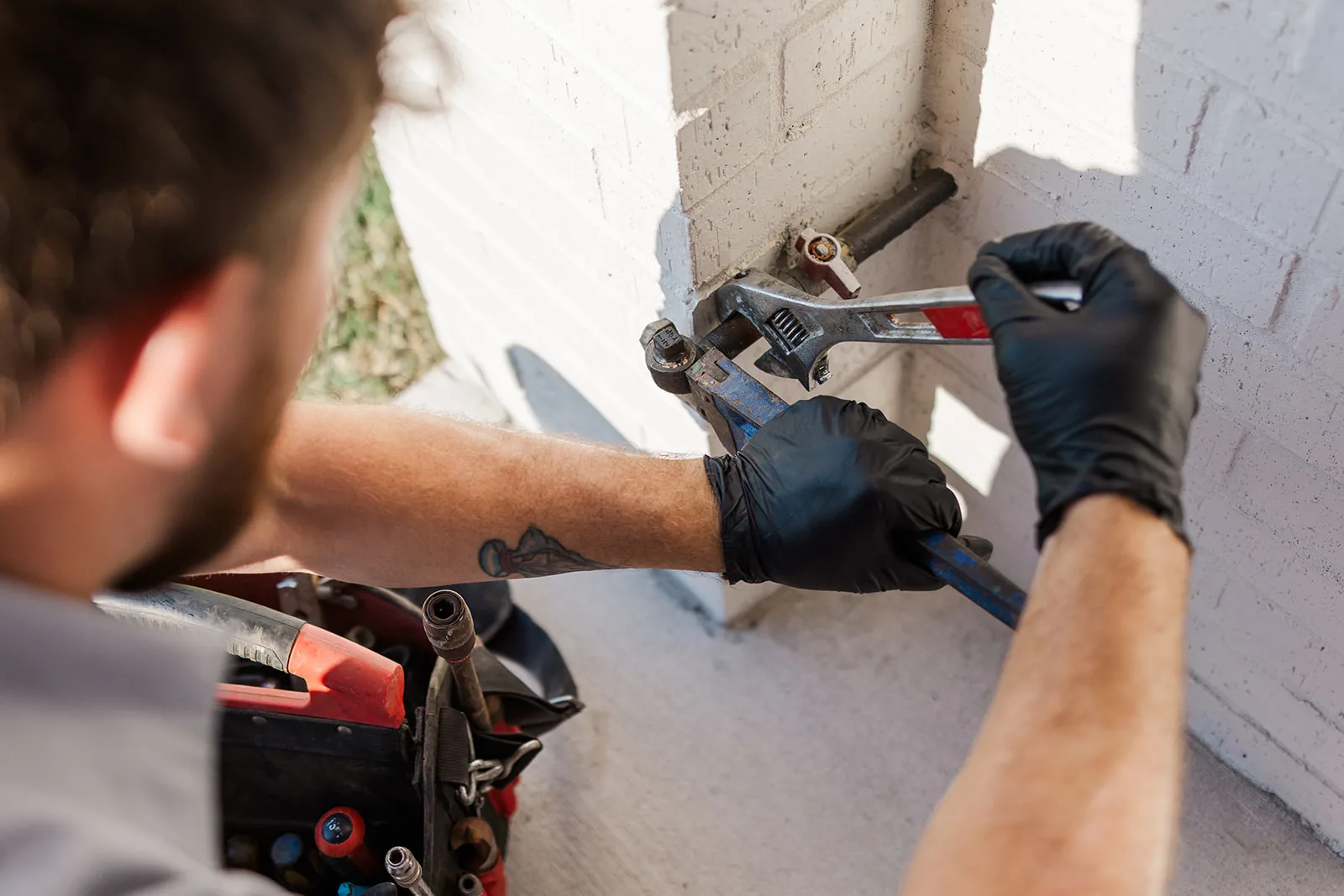
Find the cold-water supply valve on the pipe that enters the top of the water heater. Turn a round handle clockwise until it stops, or turn a lever handle a quarter turn so it sits across the pipe.
If you can’t reach the valve, it won’t turn, water is spraying near it, or you’d have to wade through water to get to it, shut off your home’s main water valve instead. It’s usually where the main line enters the house or in a box near the street meter. That stops all water to the house, including the flow feeding the water heater.
Step 3: Limit the Water Damage
Once the water and power or gas are off:
- Move valuables and anything that can soak up water away from the area.
- Drain what’s left by connecting a garden hose to the drain valve near the bottom of the tank, running it outside or to a floor drain, and opening a hot-water faucet in the house so the tank empties. The water can be scalding hot, so let it cool first if you can.
- Soak up standing water with towels or a wet/dry vacuum, and run fans to start drying.
- Take photos and video of the heater and the damage for your homeowners insurance before you throw anything away.
- Call for help. Underwood Plumbing & Septic provides emergency plumbing across Northeast Texas.
Attic or Garage? What to Watch For
Many North Texas homes have the water heater in the attic or garage, and each spot comes with its own risks.
Attic Water Heaters
An attic unit should sit in a drain pan with a line that carries water away, but a burst tank can overwhelm it fast. Water can soak the insulation and drywall below. If a ceiling starts to sag or bulge, keep everyone out from under it and call right away. A water-filled ceiling can come down without warning, so stay away from it and from any light fixtures or fans where water is dripping through. After the leak is stopped, check the pan and drain line before the heater is replaced.
Garage Water Heaters
Garage units are easier to reach, but a burst can soak stored boxes, drywall and anything on the floor. Gas units in garages are usually raised on a platform for safety, so keep that area clear and never store gasoline, paint or other flammables near a gas water heater.
Burst or Just Leaking? How to Tell
Not every puddle means the tank has failed. Once things are under control, look at where the water came from:
- From the tank body or the bottom seam: The tank itself has failed. It can’t be repaired and must be replaced.
- From pipe fittings, supply lines or the drain valve: These are often repairable.
- From the temperature and pressure relief (T&P) valve or its discharge pipe: The valve may be doing its job because pressure or temperature is too high, or the valve itself may be failing. Have a plumber check it either way. Never cap or plug a T&P valve.
- A little moisture that dries quickly: It may be condensation, which can be normal in humid weather.
For problems that aren’t an emergency, see our water heater repair service.
Repair or Replace?
If the tank burst, replacement is the only fix. If the leak came from a part, weigh these factors:
- Age: Most tank water heaters last roughly 8 to 12 years. If yours is in that range, replacing it often makes more sense than repairing it.
- Rust and corrosion on the tank or in your hot water
- Repeat repairs in the last year or two
- Efficiency and capacity: whether it still keeps up with your household
If you’re replacing anyway, it’s a good time to compare a new tank with a tankless water heater, which heats water on demand and doesn’t hold a tank of water that can burst. Learn more about our water heater replacement service.
Warning Signs Before a Water Heater Bursts
A burst water heater doesn’t always come with a warning, but these signs point to trouble:
- Rusty or discolored hot water, or rust on the outside of the tank
- Moisture or small puddles under the tank
- Popping or rumbling sounds, a sign of sediment buildup, which is common with hard water in parts of North Texas
- A T&P valve that drips or discharges often
- Age of 10 years or more
For everyday issues like lukewarm water or odd smells, read our guide From Lukewarm to Hot: Tackling Water Heater Problems.
How to Help Prevent a Burst
- Flush the tank once a year to clear sediment that weakens the bottom of the tank.
- Test the T&P valve yearly, or have your plumber do it.
- Have the anode rod checked. This rod protects the tank from corrosion and wears out over time.
- Keep the temperature reasonable. The U.S. Department of Energy suggests setting your water heater to 120°F, which saves energy and lowers the risk of scalding.
- Add protection: a drain pan, a water leak alarm and, where needed, an expansion tank to handle pressure changes.
Our Maintenance Membership includes a water heater flush along with other routine plumbing checks.
Burst Water Heater FAQs
Can a Water Heater Explode?
Yes, but it’s rare. The temperature and pressure relief valve is there to release pressure before it builds to a dangerous level. That’s why a T&P valve should never be blocked, capped or ignored if it’s leaking.
Does Homeowners Insurance Cover a Burst Water Heater?
Many policies cover sudden water damage from a burst water heater but not the cost of replacing an old heater that wore out. Coverage varies, so check your policy and call your insurance agent. Photos of the damage help with any claim.
How Long Does Water Heater Replacement Take?
It depends on the type of heater and where it’s installed. A straightforward swap of a standard tank water heater is usually the quickest job, while attic installations, upgrades to tankless, or code updates such as new venting or a drain pan take longer.
Can I Still Use Water After Shutting Off the Water Heater?
If you closed only the water heater’s cold-water valve, you’ll still have cold water in the rest of the house. If you had to shut off the main valve, you won’t have any water until it’s turned back on.
Burst Water Heater? Call Underwood Plumbing & Septic
Water on the floor can’t wait. Underwood Plumbing & Septic provides emergency water heater repair and replacement across Fannin, Grayson, Collin, Hunt and Lamar counties and Southern Oklahoma. Call (903) 449-1677 now and our licensed plumbers will help you get your hot water back.
________________